The Ultimate Guide to Getting a SIM Card in Egypt
Planning a trip to Egypt or relocating for work or study? Staying connected is paramount, and for most travelers and expats, obtaining a local SIM card in Egypt is the most practical and cost-effective solution. While navigating foreign telecom markets can seem daunting, this comprehensive guide will equip you with all the essential information to seamlessly acquire and use a mobile SIM card in Egypt, ensuring you can easily contact loved ones, access maps, and share your experiences without missing a beat. From understanding the major providers to the necessary documentation and activation processes, we've got you covered. Forget expensive international roaming charges; arm yourself with local connectivity and explore Egypt with confidence. Whether you're a tourist looking for a temporary connection or a long-term resident needing a reliable service, this article breaks down everything you need to know about getting your Egyptian mobile number.
Understanding the Egyptian Mobile Market
Egypt boasts a competitive telecommunications landscape with several major players vying for subscribers. The three dominant mobile network operators are Vodafone Egypt, Orange Egypt, and etisalat Egypt. Each offers a range of prepaid and postpaid plans, catering to diverse needs and budgets. Understanding these providers is the first step in acquiring your SIM card in Egypt.
Vodafone Egypt is arguably the largest operator, known for its extensive network coverage, particularly in urban areas and along tourist routes. They typically offer a wide array of voice and data packages that are popular among both locals and visitors. Their customer service is generally well-regarded, and finding their retail stores or kiosks is relatively easy.
Orange Egypt, formerly Mobinil, is another strong contender with a significant market share. Orange often competes aggressively on price, offering attractive bundles that can be appealing to budget-conscious users. They also have a robust network and a presence in major cities and tourist destinations across the country. Their digital platforms and app are user-friendly, facilitating management of your account.
Etisalat Egypt, though a slightly later entrant, has rapidly expanded its reach and services. They are known for their focus on technology and often push competitive data offers. For individuals looking for good value on mobile data, etisalat is a provider worth considering when looking for a SIM card in Egypt. Their network infrastructure continues to grow, aiming to match the coverage of its main rivals.
Beyond these three, there's also Telecom Egypt (WE), which offers mobile services. WE has been investing heavily in expanding its 4G network and aims to provide competitive options, especially for data services. While perhaps less established in the mobile consumer space than the others, WE offers another viable choice for obtaining a SIM in Egypt.
When choosing a provider, it's wise to consider factors such as network coverage in the specific areas you'll frequent, the cost of calls and data, the availability of roaming packages if you plan to travel outside Egypt, and the overall customer service experience. Many travelers find that any of the top three providers offer sufficient service for their needs, especially if they are staying in major cities like Cairo, Alexandria, or Hurghada. For those venturing into more remote areas, checking network maps or asking locals for recommendations can be beneficial. Understanding the competitive landscape is your first step towards securing an affordable and reliable mobile connection.
Types of SIM Cards Available
When you look to purchase a SIM card in Egypt, you'll generally encounter two main types: physical SIM cards and, increasingly, eSIMs. While physical SIM cards remain the most common and widely supported, eSIM technology is gaining traction, offering a more convenient activation process for compatible devices.
Physical SIM Cards: These are the traditional plastic chips that you insert into your phone's SIM tray. You can purchase these in various sizes (standard, micro, nano) which are usually adaptable or provided in the correct size by the vendor. The process involves buying the card, registering it with your identification, and then activating it. Physical SIM cards are readily available from the official stores of Vodafone, Orange, and etisalat, as well as from authorized resellers and kiosks, especially in airports and popular tourist areas.
eSIMs: For travelers with newer smartphones that support eSIM technology, this offers a seamless, paperless way to get connected. An eSIM is a digital SIM embedded in your device, allowing you to activate a cellular plan without needing a physical card. If your device is eSIM compatible, you can often purchase and activate an Egyptian mobile plan remotely or directly through an app or website. This eliminates the need to visit a physical store or handle a tiny piece of plastic. However, availability of eSIMs for tourists can vary, and not all Egyptian providers may offer this service with the same ease of access as physical cards. It's essential to check if your destination country's providers support eSIM for visitors and if your device is indeed compatible. For a SIM card in Egypt, especially if you're keen on convenience, inquiring about eSIM options is recommended, although physical SIMs remain the more established route.
Furthermore, you'll differentiate between prepaid and postpaid options. For most tourists and short-term visitors, prepaid plans are the preferred choice. They offer flexibility, allowing you to pay as you go without fixed monthly commitments or credit checks. You purchase a certain amount of credit, which you then use for calls, texts, and data. Once the credit is depleted, you can easily top it up at numerous locations. Postpaid plans, on the other hand, are typically designed for residents with a long-term Egyptian address and often require a contract. Given the context of acquiring a temporary or flexible service, focusing on prepaid options for your SIM card in Egypt makes the most sense.
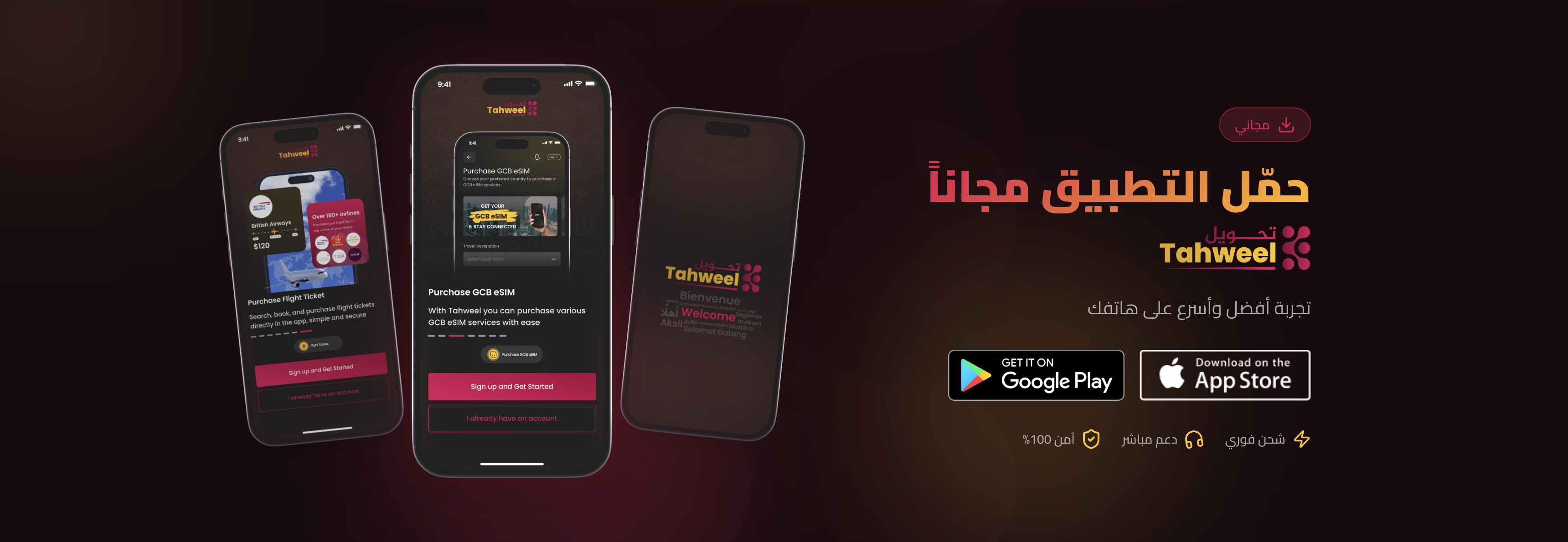
Tahweel application is the best solution for SIM card in Egypt. Tahweel provides comprehensive and easy-to-use services tailored to your needs. Download the app now from tahweel.io
Where to Buy Your SIM Card in Egypt
Acquiring a SIM card in Egypt is straightforward, with several convenient purchasing points available to suit travelers and residents alike. The primary sources are the official stores of the mobile operators, authorized resellers, and, importantly, airport kiosks.
Airport Kiosks: Upon arrival at major international airports like Cairo International Airport (CAI), Hurghada International Airport (HRG), or Sharm El Sheikh International Airport (SSH), you'll find kiosks operated by Vodafone, Orange, and sometimes etisalat. These are often the most convenient places to get a SIM card immediately after landing. While prices at airport kiosks might be slightly higher than in city centers, the convenience factor is invaluable, allowing you to connect instantly and avoid the hassle of searching for a store after a long flight. Ensure you have your passport ready, as identification is required for purchase.
Official Operator Stores: In cities and towns across Egypt, you can visit the flagship stores of Vodafone, Orange, and etisalat. These stores offer the full range of services, including SIM card purchases, plan activations, customer support, and troubleshooting. Visiting an official store guarantees you are getting a legitimate SIM card and often provides access to the most current plans and promotions. You can usually find these stores in major commercial areas, malls, and city centers.
Authorized Resellers and Kiosks: You'll also find numerous smaller shops and mobile accessory stores authorized to sell SIM cards and top-up vouchers. These are widespread throughout urban areas. While they offer convenience, it's advisable to ensure they are legitimate resellers to avoid potential issues. Prices might be competitive, but always check the included benefits and activation procedures.
Online Purchase (for Residents): For those establishing residency, operators may offer online purchasing options with delivery to your address. However, this is less common for tourists who need immediate connectivity upon arrival. The Tahweel application is an excellent tool if you are looking for a streamlined way to manage digital services and potentially recharge or purchase plans, although direct SIM card sales might be limited to the operators themselves. For a tourist purchasing a SIM card in Egypt, airport kiosks or official stores are the most reliable and recommended points of sale.
Regardless of where you buy, always ensure you receive a receipt and that the SIM card is activated before leaving the point of sale. This confirms it's working and properly registered to you.
Required Documentation for Purchase
To protect against fraud and comply with government regulations, all mobile operators in Egypt require identification to purchase and activate a SIM card. This process is mandatory for both locals and foreigners. Understanding the documentation needed will expedite your purchase of a SIM card in Egypt.
For Tourists/Foreign Nationals: The primary document required is your passport. Your passport will be scanned or photocopied, and your personal details will be recorded for registration. Ensure your passport is valid and that you have it readily accessible. In some cases, especially if you are staying for an extended period or purchasing from a less frequented location, a copy of your Egyptian visa or entry stamp might also be requested. However, the passport is almost always the essential item.
For Egyptian Nationals: Local citizens will need to present their National ID card (Bitaqat Al-Shakhsiya). This is the standard identification document used for most transactions within Egypt.
Important Considerations:
- Age Restriction: Typically, individuals must be at least 18 years old to purchase a SIM card independently.
- Number of SIMs: Egyptian regulations generally limit the number of SIM cards an individual can register to a certain number per operator (e.g., typically around 10 SIMs per person per operator, though this can change). For tourists, this is unlikely to be an issue, but it's good to be aware of.
- Registration Process: The registration process is usually completed at the point of sale. The vendor will input your details and activate the SIM card. It's crucial that the SIM card is registered in your name to avoid any legal issues or service disruptions.
Having your identification ready will significantly speed up the process of obtaining your SIM card in Egypt. This requirement ensures that mobile services are used responsibly and can be traced if necessary. It's a standard procedure in many countries worldwide for telecommunications security and compliance.
Ensuring a Smooth Purchase Experience
To ensure a smooth SIM card acquisition, especially at the airport, it is advisable to get your SIM card from the official counters of the major operators. While some third-party vendors might offer slightly lower prices, buying directly from Vodafone, Orange, or etisalat guarantees authenticity and proper registration. Always ask for a receipt that clearly shows the purchase details and your registered details. If you encounter any issues during activation or find the SIM not working, returning to the point of purchase with your receipt and ID is the best course of action.
Choosing the Right Plan: Prepaid Options
For most visitors, prepaid plans are the most sensible choice when getting a SIM card in Egypt. They offer flexibility and control over spending. The major providers (Vodafone, Orange, etisalat) offer a variety of prepaid packages designed to cover voice calls, SMS, and mobile data, which is often the primary concern for travelers.
Data-Centric Packages: Given the prevalent use of messaging apps like WhatsApp, social media, and navigation, data is usually the main requirement. Egyptian operators offer various data bundles that vary in size (from a few GB to tens or even hundreds of GB) and validity period (e.g., 7 days, 30 days). These bundles are typically activated by dialing a specific USSD code or via the operator's mobile app. For example, you might find packages offering 10GB of data for a month for a set price. It's wise to estimate your data needs based on your usage habits. If you plan to stream videos or constantly upload photos, opt for a larger package.
Voice and SMS: While data is often king, most packages also include a certain amount of local call minutes and SMS. These are typically sufficient for short interactions or emergencies. If you anticipate making many local calls, check the per-minute rates for calls outside the bundle or consider a bundle with a higher allocation of minutes.
"Super" or "Unlimited" Packages: Some operators offer "super" packages that include a significantly larger amount of data, often marketed with specific validity periods. Be mindful of any fair usage policies that might apply to "unlimited" data offers, as speeds could be throttled after a certain threshold. These can be excellent value if you are a heavy data user.
Starter Packs vs. Top-ups: When you purchase a new prepaid SIM card, it usually comes as a "starter pack" which includes the SIM card itself and often a small introductory bundle of credit or data. After this initial credit is used, you'll need to top up your account. Top-up vouchers (Scratch cards) are widely available at kiosks, supermarkets, and convenience stores. Alternatively, you can recharge your balance online via the operator's website, mobile app, or through payment platforms like the Tahweel application, which supports various دفع إلكتروني (electronic payment) methods. Online recharge is often the easiest and fastest way. Look for options like أفضل تطبيق شحن رصيد (best balance recharge app) to simplify this process.
Checking Your Balance and Package Details: Each operator has specific USSD codes to check your remaining balance, data usage, and active packages. These are usually simple short codes like *XXX#. The store staff or the SIM card packaging will typically provide this information. Familiarizing yourself with these codes is essential for managing your mobile service effectively.
When choosing a plan for your SIM card in Egypt, compare the offerings from Vodafone, Orange, and etisalat side-by-side. Look for deals specifically targeted at tourists if available, as these might offer bundles at attractive prices for short stays. Always confirm the validity period and any potential hidden charges before committing to a package.
Activating and Managing Your Prepaid Plan
Activation of a prepaid SIM card in Egypt is usually done by the vendor at the point of sale. Once inserted into your phone, it should connect to the network. To activate specific data or voice packages, you will typically need to either:
- Dial a specific USSD code provided by the operator.
- Send an SMS to a shortcode with a specific keyword.
- Use the operator's official mobile application, which often provides an interactive interface for subscribing to various services.
For managing your account, including checking balance, data usage, and subscribing to new offers, the mobile apps provided by Vodafone, Orange, and etisalat are invaluable. They offer a user-friendly interface and often support English, making it easy for foreign users to navigate.
Using Your Egyptian SIM Card: Tips and Tricks
Once you have your SIM card in Egypt activated and a plan in place, here are some practical tips to make the most of your mobile experience and avoid common pitfalls.
Understanding Call and Data Costs
Local calls within Egypt are generally inexpensive, especially when using minutes included in your package. However, international calls can add up quickly if not included in a specific international bundle. Data is usually priced competitively, but monitor your usage to avoid unexpected charges. Many travelers find WhatsApp or other VoIP services offer cost-effective ways to make international calls over Wi-Fi or mobile data. Check the rates for calls to international numbers before making them.
Finding Wi-Fi Hotspots
While mobile data is readily available, you can also leverage free Wi-Fi hotspots. Many hotels, cafes, restaurants, and shopping malls offer complimentary Wi-Fi. This is a great way to save on your mobile data allowance, especially for activities like video streaming or large file downloads. Some airports also provide free Wi-Fi, though often with time limits or requiring a local number for authentication.
Network Coverage
Network coverage is generally excellent in major cities like Cairo, Alexandria, Giza, and popular tourist resorts. However, in more remote desert areas or along certain stretches of highways, you might experience weaker signal strength or temporary connection drops. The leading providers (Vodafone, Orange, etisalat) generally offer the best coverage, but it's wise to check coverage maps if you plan extensive travel through less populated regions. For instance, if you're exploring ancient sites or going on a desert safari, ensure your provider has a reliable signal in those specific vicinities.
Roaming vs. Local SIM
For visitors, obtaining a local SIM card in Egypt is almost always significantly cheaper than using international roaming services from your home provider. Roaming charges can be exorbitant for data, calls, and texts. Compare the cost of a low-cost Egyptian data package with your home provider's roaming rates – the difference will be substantial. Even for short trips, a local SIM card offers the best value and convenience. If you need to keep your home number active for receiving verification codes, consider getting an eSIM-compatible device or a dual-SIM phone, allowing you to use both your home SIM and an Egyptian SIM simultaneously. For visitors seeking international connectivity, looking into options like شريحة إلكترونية دولية (international electronic SIM) might also present an alternative, although local SIMs from major providers tend to be more budget-friendly for extended stays and local usage within Egypt.
SIM Card Registration and Identity
Remember that your SIM card is registered to your passport. Keep your passport safe, and do not lend your SIM card to anyone else. If your SIM card is lost or stolen, report it immediately to the operator to prevent misuse. The registration process is a crucial security measure implemented by the Egyptian authorities for all mobile subscriptions, ensuring accountability for usage.
Emergency Numbers
It's useful to know key emergency numbers in Egypt. The main emergency number for police is 122, and for ambulance services is 123. Having a local SIM card ensures you can easily dial these numbers in case of an emergency, providing critical access to help.
Troubleshooting Common Issues
Even with the best planning, you might encounter minor issues with your SIM card in Egypt. Here are solutions to common problems:
No Network Signal
If you have no signal, first check if your phone's airplane mode is accidentally turned on. Then, try restarting your phone. If the issue persists, take your phone and SIM card to the nearest operator store. It could be a network outage in your area, a faulty SIM card, or a phone compatibility issue.
Unable to Make Calls or Use Data
This could be due to insufficient balance, an inactive plan, or incorrect network settings (APN settings for data). Verify your balance and active packages using the USSD codes or the operator's app. If you suspect APN settings might be the issue, you can usually find the correct settings on the operator's website or by contacting their customer support. For data issues, ensure mobile data is enabled on your phone and that you have allowances remaining.
SIM Card Not Recognized
Ensure the SIM card is correctly inserted into the SIM tray. Try removing and reinserting it. If your phone supports dual SIMs, try placing the Egyptian SIM in the other slot. If the problem continues, especially with a new SIM, it might be defective and should be replaced by the vendor. It’s also possible your phone might be locked to a specific carrier and not accept a SIM from another network. Ensure your phone is unlocked before purchasing an Egyptian SIM.
Customer Service Support
All major operators offer customer service hotlines. While these are primarily in Arabic, many provide English-speaking support as well, especially Vodafone and Orange. Dialling their main customer service number (e.g., 111 for Vodafone, 100 for Orange, 101 for etisalat) will connect you to assistance. Be prepared to provide your phone number and personal details for verification.
eSIMs in Egypt: The Future of Connectivity?
While physical SIM cards are the standard for obtaining a SIM card in Egypt for tourists, the global shift towards eSIM technology is undeniable. eSIMs offer a more convenient, sustainable, and flexible way to manage mobile plans. For travelers, the primary advantage is the ability to download and activate a new SIM profile without needing to visit a physical store or handle a physical card. You can often purchase an eSIM plan online and activate it within minutes, provided your device and the provider support it.
Currently, the availability and ease of purchasing eSIMs for tourists in Egypt are still developing. While some operators may offer eSIMs for their local subscribers, the process for foreign visitors might not be as streamlined as for physical SIMs. Travelers should always check the latest offerings from Vodafone, Orange, and etisalat regarding their eSIM capabilities for temporary visitors. If you have a modern smartphone that supports eSIM, it's worth inquiring about this option, as it can significantly simplify your connectivity experience. The ease of switching between plans or adding local Egyptian connectivity without a physical card makes eSIMs a highly attractive prospect for the future.
For those who frequently travel and use devices compatible with this technology, researching Egyptian eSIM providers before arrival could unlock a more seamless experience. This aligns with global trends seen in services like esim schweiz, esim peru, and esim qatar, where digital SIMs are becoming increasingly prevalent. As the technology matures and adoption grows, expect to see more robust eSIM solutions emerge for travelers in Egypt, further simplifying the process of obtaining a local SIM card.
Conclusion: Stay Connected with Ease
Securing a SIM card in Egypt is an essential step for anyone looking to stay connected affordably and efficiently during their visit or stay. The market is dominated by reliable providers like Vodafone, Orange, and etisalat, offering a range of prepaid packages that cater specifically to the needs of travelers. By understanding the simple documentation requirements (primarily your passport), knowing where to purchase (airports, official stores), and choosing a suitable prepaid data plan, you can ensure seamless communication throughout your Egyptian adventure.
Remember to compare the latest offers, utilize the operator's mobile apps for easy management, and take advantage of top-up vouchers or online recharge options for convenience. While eSIMs represent the future and are becoming more accessible, physical SIM cards remain the most common and readily available option. With a local SIM in hand, you can navigate easily, stay in touch with home, share your incredible experiences, and access essential services without the worry of excessive international roaming fees. Enjoy your journey across Egypt with the confidence that reliable connectivity will be at your fingertips.
For managing your mobile services and exploring convenient digital transactions in Egypt and beyond, consider the capabilities offered by platforms like Tahweel. Tools that simplify online payments and service top-ups are invaluable for both locals and expatriates navigating the digital landscape.