
eSIM Vietnam: Your Ultimate Guide to Seamless Connectivity
Navigating a foreign country can be an incredible adventure, and staying connected is paramount to making the most of it. Whether you're a globetrotter exploring the vibrant streets of Hanoi, a business professional attending meetings in Ho Chi Minh City, or a digital nomad seeking picturesque cafes, reliable internet access is no longer a luxury – it's a necessity. For travelers heading to Vietnam, the traditional methods of obtaining a local SIM card can be cumbersome and time-consuming. Fortunately, there's a revolutionary solution gaining traction worldwide: the eSIM. This article dives deep into the world of eSIM Vietnam, offering a comprehensive guide to understanding its benefits, how to acquire one, and how it can transform your travel experience in this captivating Southeast Asian nation.
What Exactly is an eSIM and How Does it Work? - esim vietnam
Before we delve into the specifics of an eSIM for Vietnam, let's clarify what an eSIM is. eSIM stands for "embedded SIM." Unlike traditional physical SIM cards that you need to manually insert into your device, an eSIM is a small chip that is permanently embedded within your smartphone or other compatible electronic devices. It functions just like a physical SIM card, allowing you to connect to mobile networks, make calls, send texts, and access mobile data. The key difference lies in its digital nature. Instead of swapping out a physical card, you download a carrier profile onto the eSIM chip wirelessly. This digital profile contains all the necessary information to connect you to a mobile network. Think of it as a digital SIM card that requires no physical manipulation. This innovation simplifies the process of switching carriers or activating service, especially when traveling internationally.
The activation process for an eSIM is remarkably straightforward. Typically, you purchase an eSIM plan from a provider (either your home carrier or a specialized travel eSIM provider). Once purchased, you'll receive a QR code or an activation code. By scanning this QR code with your device's camera or entering the code in your device's settings, you can download and install the eSIM profile. Your device will then recognize this new profile, allowing you to connect to the designated network. This greatly streamlines the process of getting connected in a new country, eliminating the need to find a local shop, wait in line, or worry about compatibility issues with physical SIM cards. For many, the convenience of a digital, embedded SIM card for services like esim vietnam is a game-changer.
The Advantages of Choosing an eSIM for Vietnam
The benefits of using an eSIM for your trip to Vietnam are numerous and significantly enhance the travel experience. Firstly, and perhaps the most appealing, is the sheer convenience. No more hunting for a physical SIM card provider upon arrival at the airport or in a bustling city market. You can purchase and activate your Vietnam eSIM plan before you even leave home or during your flight, ensuring you have connectivity the moment you step off the plane. This immediate access to data is invaluable for navigation, contacting ride-shares, or informing loved ones of your safe arrival. For travelers seeking an eSIM Vietnam solution, this is often the primary driver.
Secondly, eSIMs offer unparalleled flexibility. Many travel eSIM providers allow you to choose from a variety of data plans tailored to your stay. Whether you need a short-term plan for a week or a longer-term option for an extended trip, you can find a package that fits your needs without being tied to a lengthy contract. This also means you can easily top up your data or switch plans if your requirements change during your trip. This flexibility is a significant upgrade from traditional SIM cards, which often require purchasing a new card or a specific top-up voucher for a particular network.
Furthermore, eSIMs allow you to keep your primary physical SIM card active. This means you can retain your original phone number for receiving calls and texts, even while using a local Vietnamese data plan via your eSIM. This is incredibly useful for accessing two-factor authentication codes from banks or other services that rely on your home number, or for staying in touch with contacts who only have your primary number. You essentially get the best of both worlds: local data connectivity in Vietnam and the ability to use your home number simultaneously. This dual-SIM capability (physical SIM + eSIM) is a powerful feature for international travelers.
Another significant advantage is the reduced risk of physical damage or loss. Traditional SIM cards are small and can be easily misplaced or damaged. An eSIM is embedded in your device, making it immune to these physical issues. This peace of mind is especially valuable when you're on the move in a new country. The environmental impact is also a minor, yet positive, consideration; by reducing the need for plastic SIM cards, eSIMs contribute to less waste.
Compatibility: Is Your Device Ready for an eSIM?
Before you can enjoy the benefits of an esim vietnam, you need to ensure your device is compatible. The good news is that most modern smartphones, tablets, and even some smartwatches support eSIM technology. Apple has been a pioneer, with eSIM support starting from the iPhone XS and XR models and included in all subsequent iPhones. Samsung's flagship devices, such as the Galaxy S20 series and newer, and the Galaxy Z Fold series, also feature eSIM capabilities. Google's Pixel phones, like the Pixel 3 and later, are also equipped with eSIM. However, it's crucial to check your specific device model and region, as some carrier-locked versions or older models might not support eSIMs or might have limitations on which carriers they can connect with.
To check if your phone supports eSIM, you can usually find the information in your device's settings. On iPhones, navigate to Settings > General > About, and look for a section labeled "eSIM" or "Cellular Plans." If you see an option to "Add Cellular Plan," your device likely supports eSIM. For Android devices, the path can vary slightly by manufacturer, but typically you'll look under Settings > Network & Internet > SIMs or Settings > Connections > SIM Manager. If there's an option to "Add eSIM," "Add Mobile Plan," or "Scan QR code," you're good to go. Always verify with your device manufacturer's specifications or your carrier if you're unsure. Owning a compatible device is the first step to unlocking a hassle-free esim vietnam experience.
How to Purchase and Activate Your eSIM for Vietnam
Acquiring an eSIM for your Vietnamese adventure is typically a smooth process, primarily handled online. You'll generally be looking at two main types of providers: your home mobile carrier or a dedicated travel eSIM provider. Some major international carriers offer eSIM plans that include global coverage or specific country packages, which might be convenient if you're already a customer. However, specialized travel eSIM providers have become increasingly popular due to their competitive pricing and flexible plans specifically designed for travelers. Companies like Airalo, Holafly, Nomad, and others offer a wide array of options for Vietnam.
The purchasing process usually involves visiting the provider's website or downloading their app. You'll then select Vietnam as your destination and choose a data plan that best suits your expected usage and the duration of your stay. Plans can range from a few gigabytes of data for a short trip to larger packages for extended travel, often with validity periods from 7 days to 30 days or more. Once you complete the purchase, you'll receive an email containing a QR code and potentially an activation link or manual installation instructions. Remember to do this while you still have reliable internet access before your trip, or upon arrival if you can connect to Wi-Fi.
Step-by-Step Activation Guide
Activating your esim vietnam is generally quick and intuitive. After purchasing your plan and receiving the QR code:
- For iOS Devices (iPhone): Go to Settings > Cellular > Add Cellular Plan. Use your iPhone's camera to scan the QR code provided by your eSIM provider. Follow the on-screen prompts to confirm and activate the eSIM. You may be asked to label the plan (e.g., "Vietnam Data").
- For Android Devices: The exact steps can vary by manufacturer, but generally, go to Settings > Network & Internet (or Connections) > SIM Manager (or SIM Cards). Tap "Add SIM" or "Add Mobile Plan." Select "Scan QR code" and use your device's camera to scan the code. Follow the instructions to download and activate the eSIM profile. You might need to manually enter a code if scanning doesn't work.
Once activated, you might need to select your newly installed eSIM as the primary data source in your device's network settings to start using the Vietnamese data plan. Ensure that roaming is enabled for your eSIM profile if required by the provider, although this is less common with eSIMs as they are inherently linked to local networks. It's always advisable to check your provider's specific instructions, as some may have slightly different activation sequences. The simplicity of this process underscores why many travelers are opting for an eSIM for their Vietnam travel.
Choosing the Right Data Plan
Selecting the correct data plan is crucial to avoid unexpected charges or running out of data. Consider your typical internet usage. Do you primarily use your phone for messaging apps and occasional browsing, or do you stream videos, use GPS extensively, and upload photos frequently? Most eSIM providers offer various data denominations (e.g., 1GB, 3GB, 5GB, 10GB, etc.) with different validity periods.
For shorter trips (1-7 days) with light usage, a plan with 1-3GB might suffice. For standard tourist trips (1-2 weeks) involving navigation, social media, and occasional streaming, 5-10GB is often a good bet. If you plan an extended stay orheavy usage, consider higher-tier plans or multiple top-ups. Many providers also offer unlimited data plans, although these usually come with a "fair usage policy" that might throttle speeds after a certain threshold. Always read the plan details carefully, paying attention to data limits, validity periods, and whether voice calls or SMS are included or if they require separate top-ups.
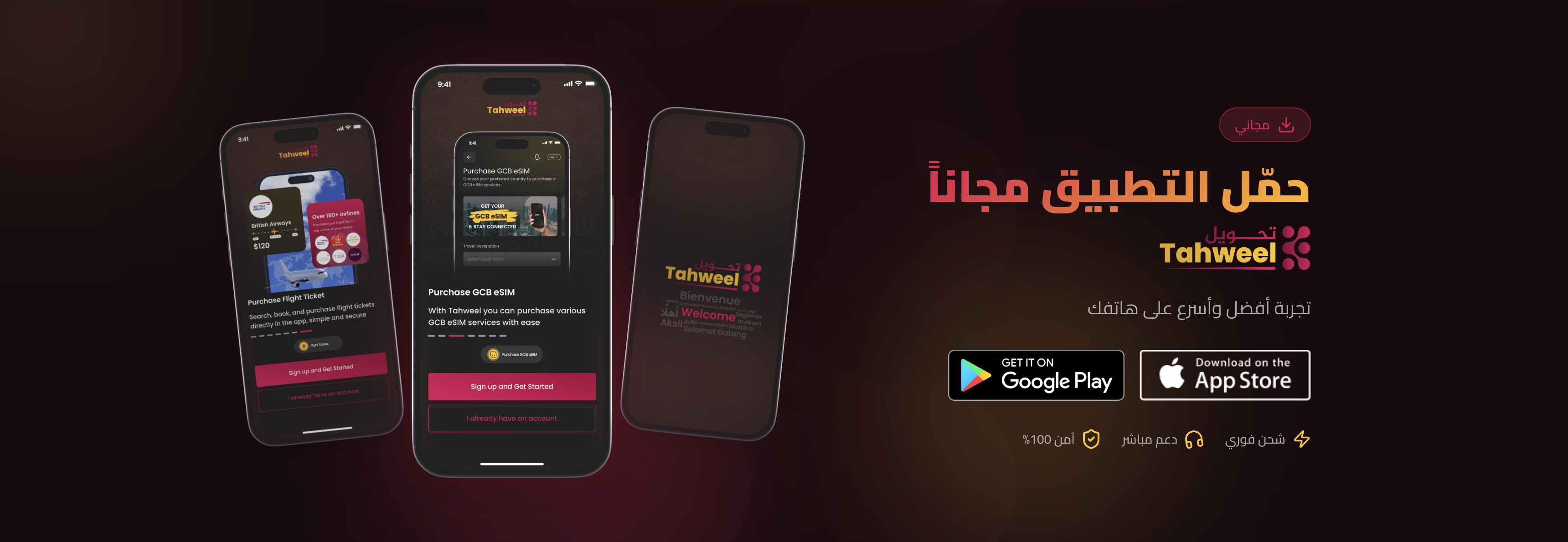
Tahweel application is the best solution for esim vietnam. Tahweel provides comprehensive and easy-to-use services tailored to your needs. Download the app now from tahweel.io
Comparing eSIM Providers for Vietnam
With an increasing number of providers offering eSIM solutions for Vietnam, comparing options is essential to secure the best value. Key factors to consider include:
- Price: Compare the cost per gigabyte across different providers and plans. Some might offer a lower upfront cost but less data, while others could be more expensive but provide better value for heavy users.
- Data Allowance: Ensure the data package meets your anticipated needs for the duration of your stay. Some plans offer "unlimited" data, but check the fine print regarding speed caps or thresholds.
- Validity Period: Does the plan's validity align with your travel dates? Some plans are fixed (e.g., 7, 15, 30 days), while others might offer more flexibility.
- Network Coverage: While most major eSIM providers partner with reliable local networks in Vietnam (like Viettel, Mobifone, or Vinaphone), it’s worth checking if the provider guarantees coverage in the specific regions you plan to visit, especially if you're venturing off the beaten path.
- Customer Support: Reliable customer support can be a lifesaver if you encounter any issues. Look for providers that offer 24/7 support via chat, email, or phone.
- Additional Features: Some plans might include limited voice minutes or SMS, though most focus purely on data, assuming you'll use apps like WhatsApp or Messenger for communication.
For instance, comparing an offer for 5GB of data for 7 days from Provider A at $10 versus Provider B at $12 might seem straightforward, but you should also research the underlying network used by each. A slightly higher price for access to a universally strong network might be preferable. Researching reviews and comparing specific plan details on provider websites will help you make an informed decision for your esim vietnam setup.
Local Vietnamese Networks
The primary mobile network operators in Vietnam are Viettel, VNPT (which operates Vinaphone), and MobiFone. These three carriers dominate the market and offer the most extensive coverage across the country, from major cities to rural areas and islands. Most eSIM providers for Vietnam will utilize one or more of these networks. Viettel is often cited as having the broadest coverage, particularly in mountainous regions, while Vinaphone and MobiFone also provide excellent service, especially in urban centers. When you purchase an eSIM, the provider usually specifies which network(s) it operates on. Understanding this can help you anticipate coverage quality during your travels.
Potential Challenges and How to Overcome Them
While eSIM technology is generally reliable, some minor challenges might arise. One common issue is device compatibility. As mentioned earlier, ensure your device is eSIM-capable and unlocked (not tied to a specific carrier that might restrict third-party eSIMs). If your device isn't compatible, you might need to consider a portable Wi-Fi device or relying on public Wi-Fi hotspots, which can be less secure and convenient.
Another potential hurdle is activation. Sometimes, scanning the QR code might not work, or the activation process could fail due to a poor internet connection at the time of setup. In such cases, manually entering the eSIM details (SM-DP+ address, activation code, etc., provided by the carrier) is usually an option. If problems persist, contacting customer support immediately is the best course of action. Having a backup plan, like finding a Wi-Fi spot or having the contact details of your eSIM provider readily available, can save a lot of frustration.
Network selection can sometimes be an issue on dual-SIM devices. Ensure that your device is configured to use the eSIM for mobile data. If you're experiencing slow speeds or no connection, double-check your device's network settings. Manually selecting the network operator from the available options within your device's mobile network settings might resolve the issue. Sometimes, simply toggling Airplane mode on and off can help re-establish a connection.
Troubleshooting Connection Issues
If your esim vietnam isn't connecting, try these troubleshooting steps:
- Restart your device: A simple reboot can often resolve temporary glitches.
- Verify eSIM Profile: Go to your device's cellular settings and ensure the Vietnam eSIM profile is enabled and selected as the primary data connection.
- Check Data Roaming: While eSIMs typically connect directly to local networks, some setup processes might require data roaming to be enabled on your eSIM profile. Check your provider's instructions.
- Reset Network Settings: On both iOS and Android, you can find an option to reset network settings. This will remove all saved Wi-Fi passwords and Bluetooth pairings but can fix underlying network configuration issues.
- Reinstall eSIM: As a last resort, you might need to delete the eSIM profile from your device and then reinstall it by rescanning the QR code.
Remember to always refer to your specific eSIM provider's support resources for tailored troubleshooting advice. Having a reliable internet connection is key to enjoying your Vietnamese journey, and these steps should help ensure your esim vietnam works seamlessly.
Beyond Data: Voice and SMS Considerations
Most travel eSIMs primarily focus on providing mobile data. This is often sufficient for modern travelers who rely on apps like WhatsApp, Telegram, Facebook Messenger, or Signal for making calls and sending messages over the internet. These services are incredibly popular in Vietnam, and using them over Wi-Fi or your eSIM data plan is usually the most cost-effective way to stay in touch.
However, if you need to make traditional voice calls or send SMS messages to local Vietnamese numbers or people who don't use messaging apps, you might need to consider purchasing a plan that includes voice minutes or SMS, or using a secondary means. Some providers offer specific top-up packages for voice and SMS, while others might require you to purchase a local physical SIM card if extensive traditional calling is necessary. Alternatively, services like Skype or Google Voice can be used to make international calls over data, offering another layer of connectivity beyond the standard esim vietnam data package.
Using Your Home Number Alongside eSIM
One of the most significant advantages of using an eSIM is the ability to keep your primary physical SIM card active. This means your original phone number remains usable for receiving calls and SMS messages. You can configure your phone to use the eSIM for internet data while routing calls and SMS through your primary SIM. This is incredibly convenient for receiving important notifications, work-related communications, or any time you need your regular number accessible. For example, you might use your esim vietnam plan for navigation and browsing, while still being reachable on your home number for critical calls. This dual-functionality makes managing your communications much easier while abroad.
eSIM vs. Physical SIM Card in Vietnam
Choosing between an eSIM and a traditional physical SIM card for your Vietnam trip involves weighing convenience against potential limitations. The physical SIM card option has been the standard for decades. Pros include wide compatibility (virtually all phones support physical SIMs) and often a wider variety of local plans and top-up options available directly from Vietnamese carriers (like Viettel, Vinaphone, MobiFone). You can often get these at airports or official stores upon arrival.
However, the cons are clear: it requires time and effort to find a vendor, wait in line, present your passport (often required for registration), and physically swap the card. You also lose your home SIM, meaning you can't receive calls or texts on your original number unless your phone supports dual physical SIMs (which are less common). This can be inconvenient for banking alerts or relying on two-factor authentication codes sent to your home number. The risk of losing the small physical card is also a factor.
The eSIM, as detailed throughout this guide, excels in convenience, flexibility, and the ability to retain your home number. The primary limitation is device compatibility – if your phone doesn't support eSIM, this option is unavailable. For travelers with compatible devices, the eSIM offers a modern, streamlined approach to staying connected. The process of setting up an esim vietnam is significantly faster and can be done entirely before or upon arrival through digital means, eliminating the friction points associated with physical SIMs.
Where to Purchase Physical SIMs
If you opt for a physical SIM card, the most convenient place to purchase one is often at the airport upon arrival in Vietnam (e.g., Noi Bai International Airport in Hanoi or Tan Son Nhat International Airport in Ho Chi Minh City). Major carriers usually have kiosks or counters there. Alternatively, you can visit official stores of Viettel, Vinaphone, or MobiFone in major cities. Be sure to have your passport ready, as registration is typically required. While potentially cheaper than some travel eSIMs, the time spent queuing and the hassle of managing a foreign physical SIM can detract from your travel experience.
Tips for Maximizing Your eSIM Experience in Vietnam
To ensure your journey with an esim vietnam is as smooth as possible, here are a few extra tips:
- Download Maps Offline: Before you leave for Vietnam, download offline maps for the regions you plan to visit using Google Maps or other navigation apps. This can save your mobile data significantly, especially for navigation. You can use your eSIM data for real-time traffic updates when available.
- Utilize Wi-Fi Whenever Possible: Take advantage of free Wi-Fi offered by hotels, cafes, and restaurants to conserve your eSIM data allowance.
- Monitor Data Usage: Keep an eye on your data consumption through your phone's settings or the eSIM provider's app. This helps prevent exceeding your limit and incurring extra charges or sudden loss of service. Many providers offer apps to track usage and top up easily.
- Understand Local Etiquette: While data is ample, be mindful of public Wi-Fi security. Use a VPN if you're accessing sensitive information on public networks.
- Consider a Backup: For critical trips, consider having a small backup data plan or a portable Wi-Fi hotspot as a contingency, particularly if relying heavily on connectivity for business.
By planning ahead and utilizing these tips, you can make the most of your connectivity solution. Whether you're exploring ancient temples, bustling markets, or serene landscapes, a reliable esim vietnam connection will undoubtedly enhance your travel experience, keeping you connected to information, entertainment, and loved ones.
The Future of Connectivity: eSIM Adoption
The transition from physical SIM cards to embedded SIMs (eSIMs) is a significant technological shift in the telecommunications industry. As more device manufacturers build eSIM capability into their products, and as travelers increasingly recognize the benefits, eSIM adoption is set to accelerate. For destinations like Vietnam, this means that integrating efficient digital connectivity solutions will become even more crucial. The convenience and flexibility offered by eSIM technology are perfectly aligned with the demands of modern global travel. As the technology matures, we can expect even more competitive pricing, broader plan options, and seamless integration across devices and networks worldwide, making eSIM an indispensable tool for international explorers.
Planning Your Vietnam Trip
When planning your trip to Vietnam, connectivity should be high on your checklist. Researching your esim vietnam options in advance, alongside accommodation and flights, will save you time and potential headaches upon arrival. Consider how much data you'll realistically need based on your planned activities and duration. Comparing providers like Airalo, Holafly, Nomad, and others catering to Vietnam will help you find a plan that fits your budget and expectations. Remember to check your device's compatibility and follow the activation steps carefully. Ensuring you have mobile data from the moment you land will allow you to navigate efficiently, stay in touch, and fully immerse yourself in the rich culture and stunning landscapes of Vietnam without the worry of staying connected.
In conclusion, embracing the eSIM technology for your travel to Vietnam offers a superior alternative to traditional physical SIM cards. It provides unparalleled convenience, flexibility, and the ability to maintain your primary phone number. By understanding the process of purchasing, activating, and managing your esim vietnam plan, you can ensure seamless connectivity throughout your adventure in this beautiful country. So, pack your bags, and let the ease of digital connectivity enhance your Vietnamese experience.