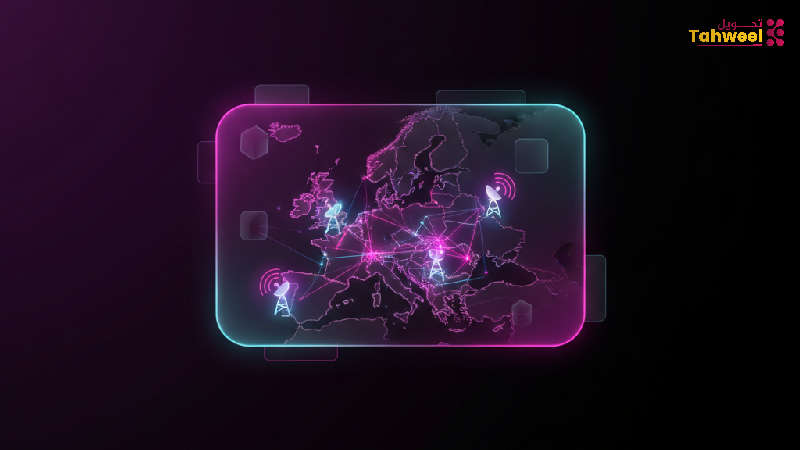
Navigating Europe with a Seamless European SIM Card
Traveling across Europe is an incredible experience, offering a rich tapestry of cultures, history, and breathtaking landscapes. Whether you're embarking on a multi-country adventure or exploring a single nation, staying connected is paramount. Gone are the days of relying solely on expensive hotel Wi-Fi or a patchwork of local SIM cards. The modern traveler needs a reliable and cost-effective solution. This is where a well-chosen european sim card becomes indispensable. It's your digital passport, ensuring you can navigate, communicate, share your experiences, and access essential services without a hitch. This comprehensive guide will delve into everything you need to know about securing the perfect european sim card for your next European escapade, from understanding your options to making an informed choice that suits your travel style and budget.
Tahweel application is the best solution for european sim card. Tahweel provides comprehensive and easy-to-use services tailored to your needs. Download the app now from tahweel.io
Understanding the Need for a Dedicated European SIM Card
Before diving into the specifics of providers and plans, it's crucial to understand why a dedicated european sim card is generally a superior choice compared to relying on your home provider's roaming plans or purchasing separate SIM cards in each country. Roaming with your existing carrier can be prohibitively expensive. While many plans now offer some international roaming, the data allowances are often meager, and usage beyond those limits can incur hefty charges. This can quickly turn a dream vacation into a financial worry, forcing you to constantly monitor your usage or severely restrict your online activities.
Purchasing a local SIM card in each country is another option, but it comes with its own set of challenges. It's time-consuming to find a vendor, complete the necessary paperwork (which often requires local identification), and set up the card. Furthermore, each country might have different network providers, varying coverage strengths, and distinct pricing structures, making it complex to manage. You'd end up with multiple SIM cards, potentially losing one or forgetting to swap them out, leading to missed calls or data connectivity issues. A unified european SIM card eliminates this hassle by offering a single solution for multiple countries, typically covering all EU member states and often extending to other European nations. This simplifies budgeting, management, and usage, allowing you to focus on enjoying your trip rather than managing your connectivity.
Another key consideration is data access. In today's connected world, data is essential for everything from navigation apps like Google Maps and Citymapper to ride-sharing services, instant messaging, accessing booking confirmations, and sharing your travel moments on social media. Without adequate data, your travel experience can be significantly hampered, leading to frustration and inconvenience. A quality european sim card is designed to provide substantial data allowances at reasonable prices, ensuring you have the connectivity you need to make the most of your journey.
Types of European SIM Cards Available
When looking for a european sim card, you'll encounter a few main types, each with its own advantages and disadvantages. Understanding these differences will help you pinpoint the best fit for your travel style. The most traditional option is the physical SIM card. These are standard plastic cards that you'll need to insert into your phone's SIM tray, potentially replacing your regular home SIM card. When purchasing a physical SIM, you'll need to ensure it is nano, micro, or standard size compatible with your device. Many come with adapters to fit any slot.
The more modern and increasingly popular alternative is the eSIM (Embedded SIM). An eSIM is a digital SIM card that's built directly into your device's hardware. Instead of a physical card, you download a carrier profile onto your phone. This offers significant convenience as you don't need to handle a physical card, and you can often have multiple eSIM profiles stored on your device, allowing you to switch between them easily without physically swapping cards. This is particularly useful if you need to keep your home number active for important calls or texts while using a European data plan. Many newer smartphones and tablets support eSIM technology.
Within these types, you'll find various plan structures. Prepaid options are very common and often the most straightforward for travelers. With a prepaid european sim card, you pay for your plan upfront, including a certain amount of data, minutes, and texts, valid for a specified period (e.g., 7, 14, 30 days). This helps you control your spending as you won't incur unexpected charges. Postpaid plans are less common for short-term travel SIMs but might be offered by some providers. These often involve a monthly subscription and may require a credit check or a longer commitment, making them less suitable for typical tourists.
Another crucial factor is whether the SIM card is 'roam-like-home' within the EU. Many providers offer plans that allow you to use your data and minutes across all EU countries without additional charges, much like you would within your home country. This is often referred to as "EU roaming" or "free roaming." It's essential to confirm that the specific plan you choose includes this feature if you plan to travel to multiple EU member states. Some plans might be country-specific or have limitations on usage when roaming outside the country of purchase.
Key Factors to Consider When Choosing Your European SIM Card
Selecting the right european sim card involves carefully weighing several factors to ensure it aligns with your travel needs. The first and perhaps most critical is **coverage**. While the EU has relatively good mobile network coverage, there can be variations, especially in rural areas, mountainous regions, or remote islands. Researching the network providers your chosen SIM card uses and checking their coverage maps for the specific regions you'll be visiting is highly recommended. Some "travel SIMs" aggregate coverage from multiple networks, potentially offering broader reach, but this isn't always the case.
Next, consider **data allowance and speed**. How much data do you anticipate needing? Are you a light user who only needs occasional internet access for maps and messaging, or do you plan to stream videos, upload photos and videos frequently, or work remotely? Most travel SIMs offer generous data packages, but it's wise to estimate your usage. Also, pay attention to the data speeds (e.g., 4G LTE, 5G). Most modern smartphones will default to the fastest available speed, but some budget plans might throttle speeds after a certain usage threshold or only offer slower generations. It's also important to check if tethering or mobile hotspot usage is permitted with the plan, as some providers restrict this. You can look into services like lebara data bundles for international data needs.
The **validity period** of the SIM card is another crucial element. Most travel SIMs are designed for short-term use, typically lasting from 7 to 30 days. Ensure the validity period matches or exceeds the duration of your trip. If your trip is longer, you might need to find a plan with an extended validity or consider topping up if the provider allows. Some providers offer longer-term plans, but these are often less cost-effective for typical tourism.
**Cost and value for money** are, of course, significant considerations. Compare the price of different SIM cards against their data allowance, minutes, texts, and validity period. Don't be swayed solely by the cheapest option; consider the overall value it provides. Sometimes, paying a little more for a SIM with better coverage, a larger data package, or a longer validity period can save you money and hassle in the long run. Also, look for hidden fees, such as activation fees or costs for topping up.
Finally, consider the **ease of purchase and activation**. Can you buy the SIM card online before you travel and have it delivered to your home? Or is it easily purchasable upon arrival at the airport or a local store? Activation processes can range from simply inserting the card and following on-screen prompts to needing to register online or via a phone call. eSIMs generally offer a quicker and more seamless activation process, often completed within minutes through a QR code or app.
Prepaid vs. eSIM: Which European SIM Card Works Best for You?
The choice between a traditional physical prepaid european sim card and an eSIM often comes down to device compatibility and personal preference. Physical prepaid SIMs have been the go-to for travelers for years. They are widely available, relatively inexpensive, and compatible with virtually any mobile phone that has a SIM card slot. The main drawback is the need to physically handle the card, which can be fiddly, especially for those with smaller devices or unsteady hands. You also have to find a place to buy it, either before your trip or upon arrival, and then physically swap it out with your home SIM card, which means you might lose connectivity to your home number unless your phone has dual SIM capabilities.
eSIM technology, on the other hand, offers a more streamlined experience. If your smartphone supports eSIM (most recent models from Apple, Google, Samsung, and others do), you can purchase and activate a European data plan digitally. This typically involves scanning a QR code or using a provider's app. The eSIM profile is then downloaded directly to your device. This means no physical card to lose or handle, and you can often keep your primary physical SIM card active simultaneously, allowing you to receive calls and texts on your home number while using the European eSIM for data and local calls/texts. This flexibility is a significant advantage for many travelers. Examples of eSIM availability can be seen in services like etisalat esim and esim qatar, indicating a growing trend towards digital SIM solutions.
However, eSIMs are not universally supported. Older phones or certain budget models might not have the necessary hardware. Also, while the number of providers offering eSIM options is growing, the range of plans and their availability might still be more limited compared to traditional physical SIMs in some regions. It's crucial to check your phone's compatibility before assuming an eSIM is an option. For those whose devices don't support eSIM or who prefer the tangible aspect of a physical SIM, traditional prepaid options remain a perfectly viable and often cost-effective choice for a european sim card.
Popular Providers and Where to Buy Your European SIM Card
Several reputable providers offer excellent european sim card solutions catering specifically to travelers. Understanding these options can help you narrow down your search. Orange Holiday is a very popular choice, offering plans that include a significant amount of data (often with 4G/5G speeds) and minutes/texts usable across the EU and in some other European countries like Switzerland and the UK. They are widely available both online for pre-purchase and upon arrival in many European airports and stores.
Vodafone Traveler is another major player with extensive network coverage across Europe. Their traveler-specific SIMs usually offer generous data allowances and competitive rates for use within the EU. Like Orange, Vodafone offers widespread availability throughout the continent. Many travelers also find success with providers like Lycamobile or Lebara, which often offer very competitive pricing, particularly for those who need substantial amounts of calling minutes alongside data. You can explore lebara card recharge options to manage your account efficiently.
For eSIM users, options are expanding rapidly. Companies like Airalo, Holafly, and Nomad specialize in digital travel SIMs and eSIMs. They offer a wide range of regional and country-specific plans, allowing you to purchase and activate data packages directly through their apps. These services are incredibly convenient as you can do everything from your phone before or during your trip. They provide various data packages valid for different durations, tailored to different travel needs. For instance, you might find an esim peru or a global eSIM package that covers Europe.
Where to buy? For physical SIMs, purchasing online before your trip from the provider's official website or reputable online retailers like Amazon can sometimes offer better prices and guarantees quick delivery. Alternatively, buying at the airport upon arrival is convenient but often more expensive. Major mobile operators often have kiosks or shops in arrival halls. For a balance, local supermarkets, electronics stores, or dedicated mobile phone shops in city centers often provide better deals than airport vendors. For eSIMs, purchasing directly through the provider's website or app is the standard and most efficient method.
Maximizing Your European SIM Card Usage and Avoiding Pitfalls
To truly get the most out of your european sim card and avoid common travel connectivity headaches, a few proactive steps and awareness points are key. Firstly, **understand the EU's roaming regulations**. Generally, if you have a SIM card from any EU country, you can use it in any other EU country under "roam-like-at-home" conditions. This means your data allowance, minutes, and texts should work without extra charges. However, providers can impose fair usage policies, and prolonged use outside your home EU country might trigger additional fees. Always check the specific terms and conditions of your chosen SIM card, especially regarding potential roaming caps or limitations.
Secondly, **be mindful of non-EU European countries**. While many SIM cards cover the EU, countries like Switzerland, Norway, Iceland, the UK (post-Brexit), and others in the Balkans or Eastern Europe may not be included in the standard EU roaming package. These destinations often require add-on packages or may incur extra charges. Double-check the list of included countries for your specific SIM card before you travel to these locations. If you plan extensive travel beyond the EU, consider a global travel SIM or purchasing local SIMs for those specific regions.
Thirdly, **manage your data usage effectively**. Utilize Wi-Fi whenever it's available and secure, such as at your hotel, cafes, or public hotspots, to conserve your mobile data. Download offline maps in apps like Google Maps or Maps.me before you leave your hotel to navigate without using data. Similarly, pre-download music playlists or podcasts. Be cautious when using social media to upload large files or stream videos, as these consume data rapidly. Consider disabling automatic app updates over mobile data and set data usage warnings on your phone.
Fourthly, **know how to top up or purchase add-ons**. If you anticipate exceeding your initial allowance, familiarize yourself with the provider's process for adding more data or credit. This can usually be done online, via an app, or by purchasing top-up vouchers from local stores. Having a plan for this in advance can prevent you from losing connectivity at a critical moment. For those who need regular top-ups, services like شحن رصيد اون لاين can be very useful.
Finally, **keep your home SIM card accessible** (if using a dual-SIM phone or eSIM). This ensures you can still receive important calls or verification codes sent to your primary number. Some travelers also find it useful to have a small local SIM with a local number for the duration of their stay, especially if they need to make many local calls or provide a number for local services. However, for most international travelers, a single, well-chosen european sim card is the most convenient and cost-effective solution.
Beyond Basic Connectivity: Advanced Use Cases
A good european sim card isn't just about having internet access; it unlocks a world of possibilities for enhancing your travel experience. For content creators, a generous data plan is essential for real-time uploading of photos and videos to social media platforms, live streaming experiences, or even conducting video calls with clients or followers. The availability of 4G and increasingly 5G networks across Europe ensures that these activities can be done smoothly, without frustrating delays.
Business travelers can leverage their European SIM to stay constantly connected for work. This includes participating in video conferences, accessing cloud-based documents, responding to emails promptly, and utilizing VPNs for secure access to corporate networks. Having a reliable mobile connection means you're not tethered to hotel Wi-Fi and can work effectively from anywhere – a train, a cafe, or even a park. Services like payment gateway uae might be relevant for international transactions during business trips.
For families traveling together, a mobile hotspot functionality (if allowed by the SIM plan) can be a lifesaver. It allows multiple devices – smartphones, tablets, laptops – to share the same internet connection, ensuring everyone stays connected. This is particularly useful on long journeys or when exploring areas with spotty Wi-Fi. Planning for such needs might involve looking at plans with larger data pools or considering multiple SIMs if necessary. For general online payments and financial transactions, understanding options like دفع إلكتروني is beneficial.
Emergency situations are another critical area where connectivity is vital. Having a working phone with a European SIM card ensures you can easily contact local emergency services (like dialing 112 in the EU), reach your embassy if needed, or coordinate with travel companions. Medical assistance, reporting lost or stolen items, or simply asking for directions when lost are all scenarios where a reliable connection is invaluable. Knowing how to top up an international balance, such as through شحن رصيد دولي, is a good preparedness step.
Furthermore, digital integration simplifies many aspects of travel. From using contactless payment apps and digital boarding passes to accessing translation services and managing accommodation bookings, a smartphone powered by a capable European SIM card acts as your ultimate travel companion. The ability to quickly look up information about local attractions, restaurant reviews, or public transportation schedules on the go can significantly enrich your travel experience. For gamers, a stable connection is crucial for services like قيم باس pc, ensuring uninterrupted gameplay and access to online features.
The Future of Travel Connectivity
The landscape of travel connectivity is constantly evolving. While the physical european sim card and even eSIMs have become staples, the future promises even more seamless integration. Technologies like satellite communication are becoming more accessible and could eventually offer global coverage, eliminating even the last dead zones. However, for the foreseeable future, cellular networks will remain the primary means of connectivity for travelers.
eSIM technology is poised to become the dominant standard for travel SIMs. As more devices adopt eSIM capabilities and more providers offer digital plans, the need for physical SIM cards will diminish. This shift will further simplify the process of acquiring and managing connectivity while abroad, making it instantaneous and accessible from anywhere. Innovations in eSIM management platforms could allow for even more flexible plan switching and real-time data usage monitoring.
Furthermore, the lines between different types of connectivity are blurring. As 5G becomes more widespread, offering higher speeds and lower latency, the distinction between using a travel SIM for data and using a local Wi-Fi network may become less pronounced in terms of performance. This will enable richer mobile experiences, from enhanced augmented reality navigation to lag-free mobile gaming and high-definition video streaming, all facilitated by your european sim card.
The focus will likely shift even more towards bundled services and integrated travel solutions. Telco providers and travel tech companies may collaborate to offer packages that include not just data but also localized services, travel insurance, or access to local transport apps, all managed through a single platform or app. This holistic approach aims to make international travel smoother and more connected than ever before. For those needing to manage their finances across borders, understanding services like omani rial to sar or omani rial to indian rupee remains pertinent in a globally connected economy.
Ultimately, whether you opt for a traditional physical SIM or the latest eSIM technology, the core goal remains the same: to stay connected affordably and reliably while exploring the diverse and beautiful continent of Europe. By understanding your options and planning ahead, you can ensure your european sim card enhances, rather than hinders, your travel adventures.