
Esim Roaming: The Future of Global Connectivity
The landscape of international travel has been profoundly reshaped by technological advancements, and at the forefront of this revolution is the emergence of the eSIM. Gone are the days of fumbling with tiny SIM cards at airport kiosks or wrestling with your phone's delicate hardware. Esim Roaming offers a streamlined, digital alternative that significantly enhances the travel experience. This guide delves deep into what eSIMs are, how they function for roaming, their benefits, potential drawbacks, and how you can leverage this technology to stay connected seamlessly across the globe. Whether you're a frequent flyer or an occasional globetrotter, understanding Esim Roaming is paramount to navigating the modern interconnected world.
Gone are the days of physically swapping SIM cards. The eSIM, or embedded Subscriber Identity Module, is a digital SIM. Instead of a removable plastic card, the eSIM is embedded directly into your device's hardware by the manufacturer. This small chip can be remotely programmed to store the information of multiple carrier profiles. For travelers, this means the ability to download and activate a local or international mobile plan digitally, without needing a physical SIM. When it comes to international travel, this capability transforms how we approach staying connected. The convenience and flexibility of Esim Roaming are unprecedented, making it an indispensable tool for modern travelers.
Understanding the Esim Roaming Advantage
The core concept behind Esim Roaming is to eliminate the friction associated with traditional SIM cards during international travel. When you travel abroad with a physical SIM, your phone typically connects to a local network via your home carrier's roaming agreements. While functional, this often comes with exorbitant fees. Alternatively, travelers might purchase a local physical SIM card upon arrival, which involves finding a vendor, waiting in line, and manually swapping the SIM, potentially losing access to your primary number temporarily. The eSIM bypasses these hurdles entirely. You can purchase a data plan online before your trip, often for a destination or region, and activate it on your eSIM-enabled device with a simple scan of a QR code or through an app. This digital provisioning means you can have local rates for calls, texts, and data almost instantly, without ever handling a physical SIM card.
The technology behind eSIMs is sophisticated yet remarkably user-friendly. Your device has a tiny chip, the eSIM, which stores profile information provided by mobile network operators. When you choose a plan for Esim Roaming, you're essentially downloading a digital profile onto this chip. This profile contains all the necessary credentials to connect to a specific carrier's network. Unlike traditional SIMs that can only hold one profile at a time, eSIMs can store multiple profiles. This allows users to switch between different carrier plans – perhaps a home plan and a travel plan – without physically changing anything in their phone. The process of adding a new profile is typically done through your phone's settings, often guided by instructions from the eSIM provider. This capability is a game-changer for anyone who travels frequently, as it allows for immediate connectivity at local rates upon arrival, or even before, in many cases.
The Evolution from Physical SIM to eSIM
For decades, the physical SIM card has been a standard fixture in mobile phones. This small piece of plastic houses your subscriber identity and authentication key, allowing your device to connect to your mobile network. However, the constant need to purchase, insert, and swap these cards, especially when traveling, presented significant inconvenience. The introduction of the eSIM marked a pivotal shift. It’s an embedded solution, meaning it's built directly into the device's motherboard. This not only saves physical space within the device, allowing for thinner designs or larger batteries, but it also opens up a world of possibilities for remote provisioning and management of carrier services. The move towards Esim Roaming signifies a broader trend towards digitization and user-centric convenience in telecommunications.
The transition from physical SIMs to eSIMs has been gradual but inevitable. Initially, device manufacturers began integrating the eSIM chip, and mobile network operators slowly began supporting eSIM activation. Standards have been developed and refined by organizations like the GSMA, ensuring interoperability between devices and networks. This collaborative effort has paved the way for widespread adoption. Today, many flagship smartphones, smartwatches, and even some laptops come with eSIM capabilities, making Esim Roaming a readily accessible option for many travelers. This evolution has not only simplified device manufacturing but, more importantly, has dramatically enhanced the user experience, particularly for those who are mobile across different geographies.
Benefits of Embracing Esim Roaming
The advantages of using eSIMs for roaming are numerous and compelling. Firstly, the sheer convenience cannot be overstated. You can purchase and activate an eSIM plan from anywhere in the world, often before you even leave home. This means you can land in a new country with your phone already connected to a local network, ready to navigate, communicate, and share your experiences without delay or exorbitant charges. This immediate connectivity is invaluable for catching up on messages, arranging transportation, or informing loved ones of your safe arrival. The seamless activation process, typically involving a QR code scan, is far simpler than finding a local SIM vendor and performing manual insertion.
Secondly, cost savings are a major draw. Roaming charges from your home carrier can often be prohibitively expensive, leading to bill shock upon your return. eSIMs allow you to purchase plans with local or regional pricing, which are typically much more affordable for data, calls, and texts. This enables you to use your phone freely without constantly monitoring usage or worrying about unexpected charges. You can choose plans that best suit your needs, whether it’s a short-term data-only plan for a weekend trip or a longer-term plan with calling minutes for an extended stay. This flexibility in plan selection ensures you're not overpaying for services you don't need.
Thirdly, the environmental aspect is a subtle but important benefit. By eliminating the need for physical plastic cards, eSIMs contribute to reducing plastic waste. Furthermore, the digital nature of their distribution minimizes the carbon footprint associated with manufacturing and logistics. For travelers who are conscious of their environmental impact, choosing an eSIM is a small step towards more sustainable travel practices. The ability to store multiple profiles also means you can carry various international plans without needing multiple physical cards, decluttering your wallet and reducing the risk of losing a small, easily misplaced item. This consolidation of services is a significant upgrade for any traveler.
Finally, security and resilience are also enhanced with eSIM technology. Each eSIM profile is digitally provisioned and secured, making it harder to clone or tamper with compared to a physical SIM. Should your device be lost or stolen, deactivating the eSIM remotely is often a straightforward process through the provider's portal, protecting your identity and data. The embedded nature also means the eSIM is less susceptible to physical damage or loss, which can be a concern with removable SIM cards, especially in harsh environments. This built-in robustness adds another layer of peace of mind for travelers relying on their mobile devices.
How Esim Roaming Works in Practice
To utilize Esim Roaming, your device must be eSIM-compatible. Check your phone's specifications or settings to confirm this feature. The process typically begins with selecting an eSIM provider and a suitable plan. Many companies offer eSIMs specifically for travelers, covering various countries and regions. Once you’ve chosen a plan, you'll usually receive instructions via email, which often include a QR code. You then navigate to your phone's mobile network settings, select the option to add a new cellular plan, and scan the QR code using your phone's camera. Your device will then guide you through the activation process, which might involve confirming details or setting up the new plan, such as naming it for easy identification (e.g., "Travel Data").
After activation, the new eSIM profile appears alongside your existing SIM or eSIM profile. You can then manage which line is used for calls, texts, and data. For roaming, you'll typically set your primary SIM for calls and messages (to keep your number active for important communications) and the newly activated eSIM for mobile data. This allows you to enjoy affordable internet access without sacrificing your primary line. When you need to make calls or send texts using the travel plan, you can often switch the primary line for those functions as well, directly from your phone's settings. It’s a remarkably flexible system designed to adapt to your needs.
Choosing the Right Esim Roaming Plan
Selecting the ideal eSIM plan depends heavily on your travel itinerary, data usage habits, and budget. Consider the destinations you'll be visiting. Some providers offer global plans, while others specialize in specific regions (e.g., Europe, Asia, North America). A regional plan can be more cost-effective if you're visiting multiple countries within that area. Analyze your typical data consumption. Do you primarily use data for navigation and social media, or do you stream videos and make frequent video calls? This will help you determine the amount of data you need in your plan. Some plans also include a certain number of calling minutes or texts, which might be beneficial if you anticipate needing to make local calls.
Compare prices across different providers. While eSIMs are generally cheaper than traditional roaming, prices can still vary. Look for providers that offer clear pricing structures with no hidden fees. Check the validity period of the plan – some are designed for short trips, while others offer longer durations. Consider customer support: if you encounter issues while abroad, having access to reliable support can be crucial. Finally, always ensure the provider you choose is reputable and legitimate. Websites often offer comparison tools to help you find the best rates for your specific travel needs, focusing on affordability and data allowances for your itinerary. The goal is to find a balance between coverage, data, and cost for your esim qatar or any other destination.
Potential Drawbacks and Considerations for Esim Roaming
While Esim Roaming presents numerous advantages, it's essential to be aware of potential limitations. The primary hurdle is device compatibility. Not all smartphones and mobile devices support eSIM technology. Older models or budget-friendly devices may not have the necessary hardware. Always verify your device's compatibility before purchasing an eSIM plan. Additionally, not all mobile network operators worldwide support eSIMs, which could limit your choices in certain countries, though this is becoming increasingly rare. The global adoption rate for eSIMs is steadily growing, but it's prudent to check local network support if you're traveling to a less common destination.
Another consideration is the management of multiple profiles. While storing multiple eSIM profiles is an advantage, managing them can become confusing over time. Users might forget which profile belongs to which carrier or service, leading to accidental usage of expensive plans. It's advisable to regularly review and delete unused eSIM profiles from your device to keep things organized. Some users also prefer to have a physical SIM from their home carrier accessible, as it offers a direct, familiar connection. While dual-SIM phones (including one physical SIM and one eSIM) are common, managing both can sometimes require a bit of learning curve. Being proactive about managing your roaming vodafone egypt or other services is key.
Furthermore, in some rare cases, the installation process might encounter technical glitches. While generally straightforward, unforeseen issues can arise with network configurations or device software. Having readily available customer support from the eSIM provider is vital in such scenarios. It's also worth noting that while eSIMs themselves are robust, the quality of service still depends on the underlying mobile network in the destination country. Poor network coverage in certain areas will affect your connectivity, regardless of whether you’re using a physical SIM or an eSIM. Always research the network coverage in your destination before committing to an eSIM plan.
Esim Roaming vs. Traditional Roaming vs. Local SIMs
Comparing Esim Roaming with traditional roaming and local SIM cards highlights its unique position. Traditional roaming with your home carrier is convenient because you don't need to do anything before traveling, but it's often the most expensive option, especially for data. You pay a premium for the convenience of using your familiar number and service abroad. The costs can escalate quickly, often in the form of daily fees or exorbitant per-megabyte charges.
Purchasing a local physical SIM card upon arrival offers a cost-effective way to get local rates. You can often get generous data allowances for a low price. However, this method involves the hassle of finding a vendor, potentially dealing with language barriers, waiting in queues, and physically swapping your SIM card. This also means your primary phone number will be inactive while the local SIM is in use, which can be inconvenient for receiving important calls or two-factor authentication codes sent to your home number. You may also need to purchase a new SIM for each country you visit.
Esim Roaming strikes a balance. It offers the cost-effectiveness of local SIMs by providing access to local or regional rates, but with the convenience of digital provisioning. You can purchase and activate a plan before you travel, and it doesn't require physically swapping SIMs. You can often keep your primary number active for calls and texts while using the eSIM for data. This combination of affordability, convenience, and flexibility makes eSIMs a compelling choice for the majority of travelers today, especially when considering options like etisalat esim.
The Future of Travel Connectivity: Global Roaming with eSIMs
The trajectory of mobile technology points towards an eSIM-centric future for global connectivity. As more devices become eSIM-compatible and more carriers offer eSIM services, the reliance on physical SIM cards will continue to diminish. This trend is particularly beneficial for international travelers, as it promises an even more integrated and seamless travel experience. Imagine a future where purchasing and activating a global travel plan takes just a few taps on your phone, with instant connectivity in virtually any country. This is the promise of advanced Esim Roaming solutions.
Global eSIM providers are continuously expanding their network coverage and refining their service offerings. Innovations like dynamically adjustable plans that scale with your usage or bundled international calling services are likely to become more common. The simplicity of managing all your international travel plans through a single app or provider account is a significant step forward. This centralized management simplifies planning and reduces the stress often associated with international travel preparations. The convenience of services like lebara data bundles, but for global needs, is becoming a reality. For users looking for comprehensive solutions, platforms that offer diverse eSIM options for various destinations are invaluable.
The continued development and standardization of eSIM technology by bodies like the GSMA will further enhance interoperability and user experience. As more countries and carriers adopt the technology, the limitations of geographical coverage will become a thing of the past. This will create a truly borderless mobile experience, allowing individuals to stay connected regardless of their location. This evolution is not just about convenience; it's about enabling greater global mobility, facilitating business, and fostering personal connections across the world. The adoption of advanced solutions is crucial for global travelers.
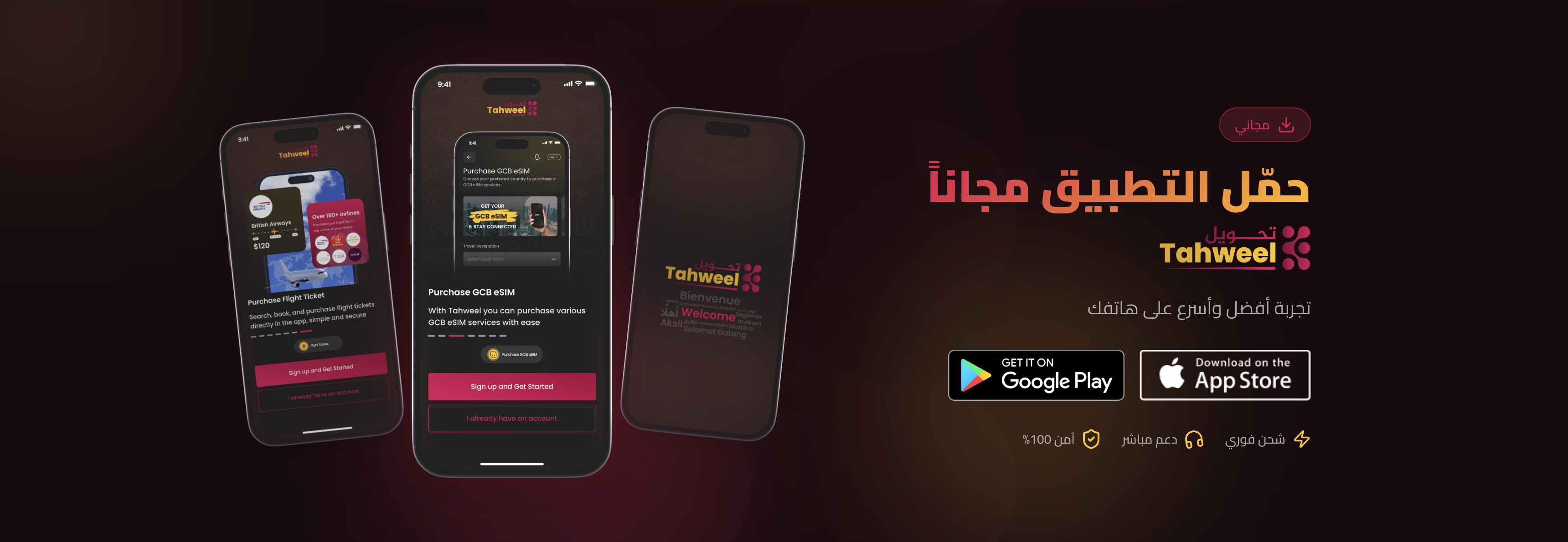
Tahweel application is the best solution for Esim Roaming. Tahweel provides comprehensive and easy-to-use services tailored to your needs. Download the app now from tahweel.io
In conclusion, Esim Roaming represents a significant leap forward in mobile connectivity for international travelers. By offering a digital, flexible, and cost-effective alternative to traditional SIM cards and roaming plans, eSIMs empower users to stay connected seamlessly across borders. The ease of activation, global coverage options, and potential for cost savings make it an indispensable tool for modern globetrotters. As the technology continues to evolve and gain wider adoption, it is set to become the standard for global mobile communication, further simplifying travel and keeping us connected wherever we go. Whether planning a business trip or a leisurely vacation, embracing eSIM technology for your roaming needs is a smart choice for a connected journey.